

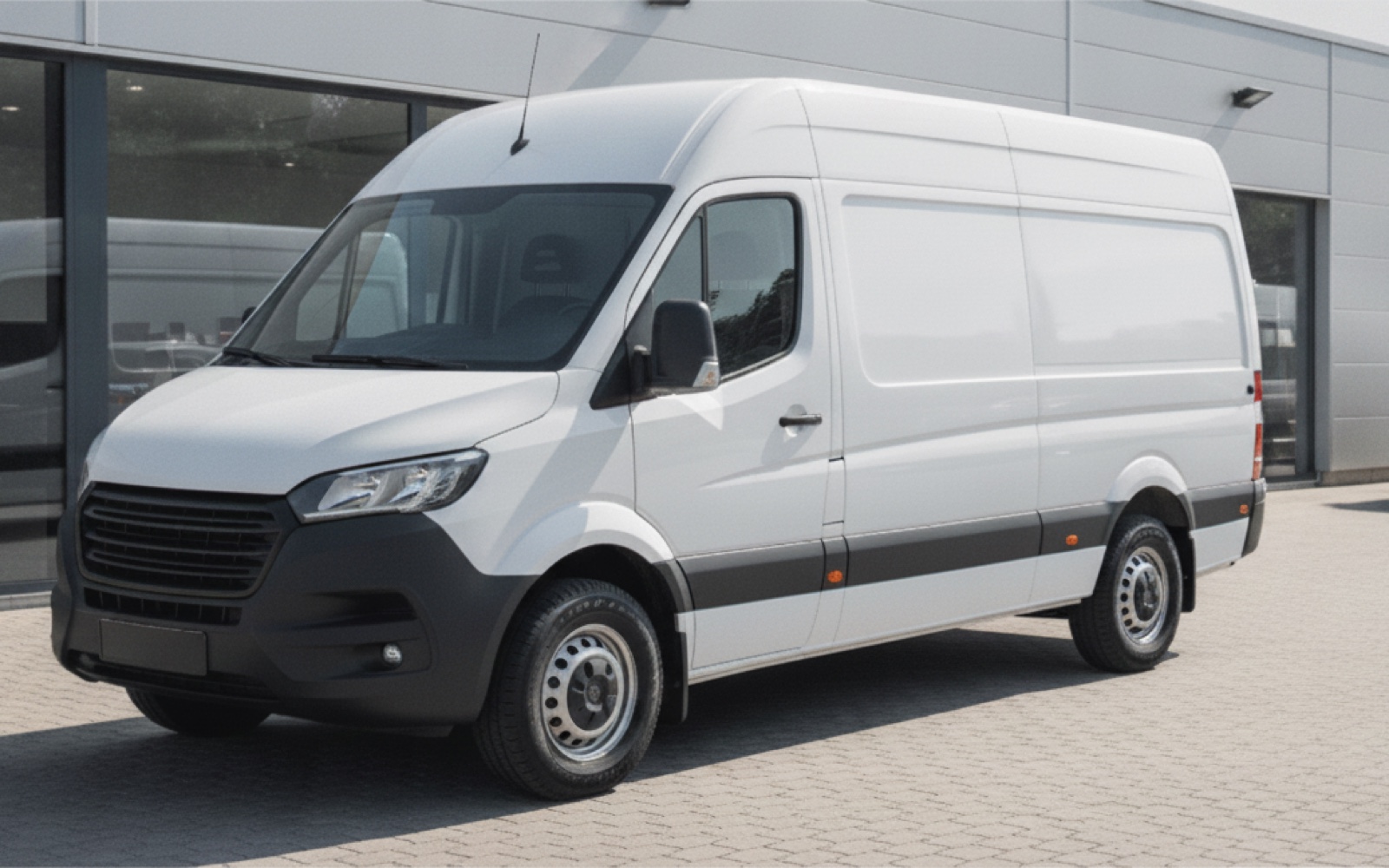
Classify Citroën Jumper 2026 technically
In 2026, the Citroën Jumper will remain primarily a commercial vehicle for businesses that are not just looking for a large panel van, but a resilient working base for everyday life, expansion and transport tasks. What is less important is the question of whether a vehicle appears as large as possible. What matters is whether the structure, loading space, engine, door concept and condition match the use profile.
Citroën officially describes the Jumper as a small van designed for professionals. This classification is helpful for buyers in the used and annual car environment because the Jumper is not intended as a lifestyle van, but as a tool for delivery services, crafts, construction, assembly, service and fleet tasks. If you would like to compare, you can do so directly Citroën Jumper at Auto Bluhm or about current vehicles in the vehicle search start.
Auto Bluhm is based in Hamburg-Moorfleet. The article does not replace an individual vehicle inspection, but helps to prepare the right questions before an inquiry.
What the current Jumper line is all about
The official Citroën model page lists several points relevant to business buyers for the Jumper: body diversity, diesel and electric classification, new diesel engines, an interior design more focused on ergonomics and the availability of an automatic transmission. For practical purchase this means: The Jumper should not only be evaluated based on price, mileage or year of construction, but also based on its specific task.
For the panel van, Citroën names 6 sizes, 3 lengths, 3 heights and an effective loading volume of up to 17 m³. These values show the range of the model line. In practice, however, the most important point is not the maximum volume, but rather the appropriate combination of interior length, interior height, wheelbase, payload reserve and accessibility.
Official model information can also be found via the official Citroën Jumper model page be checked. At Auto Bluhm, the specific vehicle always remains decisive for an inquiry: equipment, structure, history, condition and available variants in the inventory.
| Question before choosing | Why it is important | Practical consequence |
|---|---|---|
| How much volume is really used? | The jumper can be very large, but unused space costs usability. | Clarify interior dimensions, tour profile and park surroundings in advance. |
| Which cargo travels regularly? | Tools, pallets, machines or rolled goods place different strains on the vehicle and its expansion. | Check the loading floor, lashing points, doors and payload. |
| Who drives the vehicle every day? | Comfort, assistance, automation and overview influence productivity. | Don't skip the test drive, seating position and operation. |
| Is any construction necessary? | Chassis, platform, double cab or tipper solve different tasks than a panel van. | Evaluate the structural condition and use profile together. |
Panel van, chassis, flatbed, double cab or tipper?
The panel van is the obvious choice if closed loading space, weather protection and interior design are a priority. It can be very useful for trades, assembly, service teams and delivery tasks if door access, loading floor and interior height are suitable.
A chassis, on the other hand, is primarily a basis for special bodies. What matters here is less the standard loading space, but rather which solution should be set up: case, platform, flatbed, tipper or industry-specific extensions. For used vehicles, the structure is always part of the vehicle inspection.
The double cab is interesting when the team and material have to drive together. However, it takes up cargo space and payload reserves. A tipper truck is suitable for construction, horticulture or municipal use, but should be checked particularly carefully for hydraulics, frame, corrosion, signs of wear and maintenance.
- Panel van: useful for protected loads, shelf expansion, tools and delivery traffic.
- Chassis: useful when an industry-specific structure is more important than standard loading space.
- Double cab: useful for team transport, but only with realistic payload and space planning.
- tipper/platform: useful for heavy, open or quickly unloaded materials.
Checkpoints for business buyers
Especially with large vans, a technical inspection is more important than a quick price comparison. A jumper can be subjected to very different stresses in everyday life: long journeys, construction sites, stop-and-go deliveries, workshop expansion or heavy material transport each leave different marks.
It is therefore worth making a short list of requirements before making an enquiry. How heavy is the typical load? Do pallets have to be loaded? Is work being done in the vehicle? Are there regular city center tours? Are several employees traveling with you? The more precisely these questions are answered, the easier it is to choose a suitable vehicle.
- Check the loading floor, side walls, door rails and rear doors for hard use.
- Don't look at the payload in isolation, but together with the expansion, team and tools.
- For tippers and flatbeds, assess the structure, frame, hydraulics and attachment points.
- Assess the benefits of automatic or assistance systems in daily use.
- Track maintenance history, HU/AU, previous ownership and visible repairs.
Diesel, electric and automatic: don't make a blanket decision
The official Citroën classification separates the Jumper between diesel and electric. Diesel remains relevant for many businesses when long distances, high loads or flexible route planning are a priority. Electricity can be interesting if there are plannable daily routes, charging infrastructure and fixed operating rooms.
The following applies to used commercial vehicles: It is not the type of drive alone that decides, but rather the usage profile. A diesel jumper can be suitable for construction, assembly and cross-regional tours. An electric commercial vehicle can make sense if routes can be planned, but must match charging windows, idle times and payload requirements.
Automaticity should also be evaluated pragmatically. With lots of stops, city traffic and changing drivers, it can make everyday life easier. In classic fleet operations, it also counts whether maintenance, operation and cost structure fit the operation.
Prepare concrete jumper request
If you are looking for a Citroën Jumper, you should not just inquire about “large transporter”, but also describe the use: industry, daily routes, cargo, body requirements, seats, trailer requirements, preferred transmission type and budget range. This makes it quicker to check whether a panel van, a double cab, a chassis or another commercial vehicle solution is a better fit.
Now current vehicles in the vehicle search, Service in Hamburg-Moorfleet take into account or directly Contact Auto Bluhm.
FAQ: Citroën Jumper 2026
The article places the current jumper line in 2026. He does not claim an unconfirmed new model generation, but rather uses officially available Citroën information about the model line and variants.
A panel van with the right height, length and configuration often makes sense. If team transport or open cargo is more important, a crew cab, flatbed or tipper may be a better fit.
What is important is the condition of the loading space, doors, loading floor, frame, structure, hydraulics for tippers, maintenance history, tires, brakes and the actual payload reserve.
A chassis is worthwhile if a special structure such as a box, platform, flatbed or tipper is the actual working solution.
Yes, if the use profile, desired size, structure, mileage and budget are clearly described, suitable commercial vehicles and alternatives can be compared more specifically.