

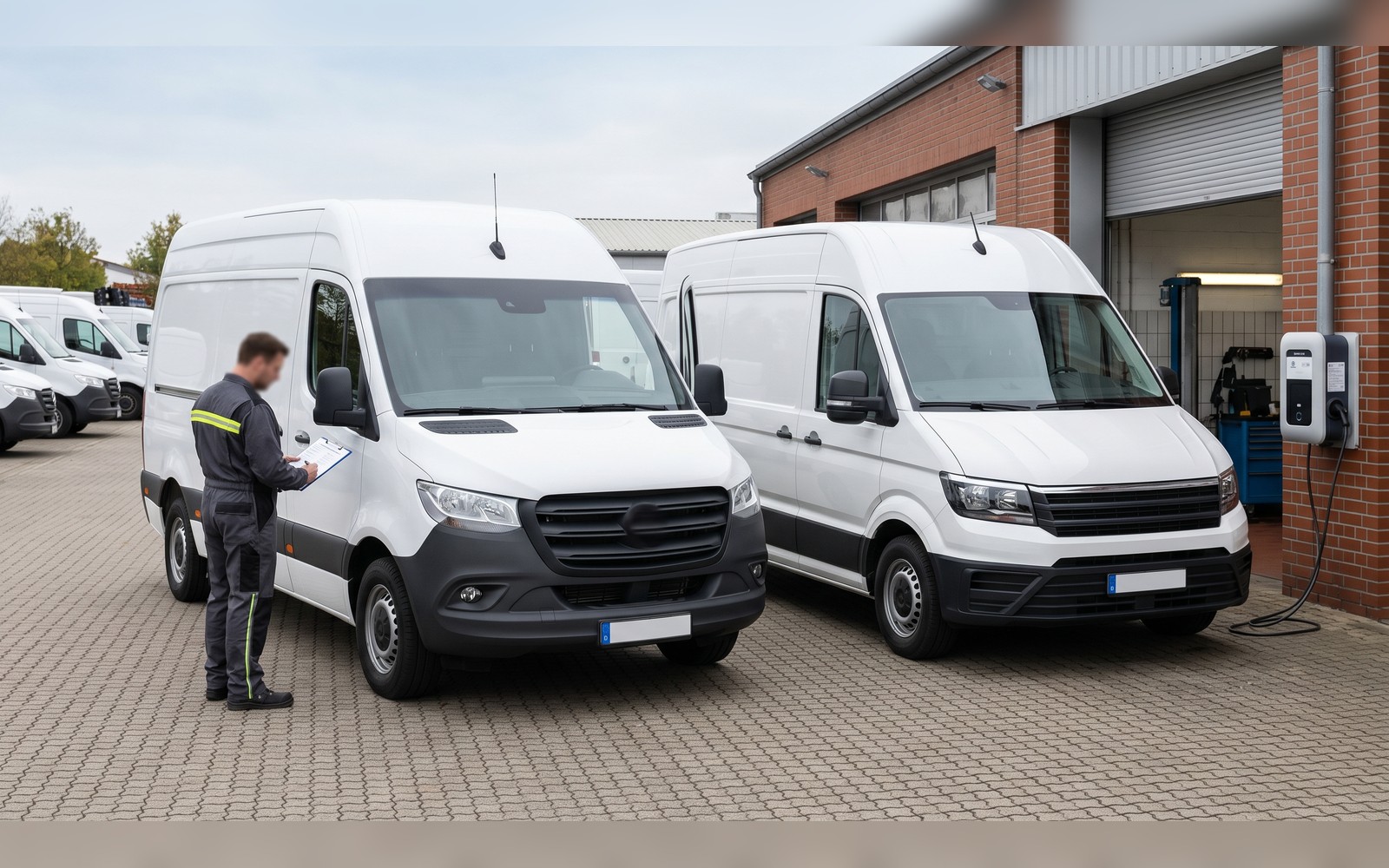
Decide drive based on tour profile
The van market is changing: electric models are becoming more visible, but diesel remains relevant for many businesses. The right question is therefore not diesel or electric, but rather: What routes, charging times, payloads and locations does the business have?
When buying used, businesses should soberly compare diesel and electric options. Entrances are current vehicle search, Mercedes-Benz Sprinter for Bremen, IVECO Daily for Kiel, Ford Transit for Bremen and Transporter for Kiel.
When diesel can continue to make sense
Diesel often remains strong when long distances, changing locations, heavy loads, towing a trailer or a lack of charging infrastructure play a role. When it comes to used commercial vehicles, the selection of diesel vans is currently broader.
A thorough check is still important: maintenance history, mileage, type of use, wear, tires, brakes and planned environmental requirements all belong together.
| Profile | Diesel speaks for it | Check electrical if... |
|---|---|---|
| Long distance | Range and refueling infrastructure | There are fixed charging points and plannable routes |
| City delivery | wide selection of used items | short fixed tours dominate |
| Heavy usage | payload and body selection | Model, payload and loading time match |
| Service operation | Flexibility | Vehicle can be charged safely at night |
When electric becomes interesting
Electric vans are particularly interesting when routes can be planned, have their own charging infrastructure, city traffic and recurring daily kilometers. A business can then integrate the charging times into their daily routine.
Nevertheless, payload, winter efficiency, real distance, loading window and acquisition costs should be checked realistically. The battery condition is also an important point for used vehicles.
- Record daily kilometers and charging windows.
- Realistically examine your own charging infrastructure.
- Connect payload and structure with battery weight.
- Don't ignore winter operation and reserve.
- Service in Hamburg-Moorfleet and Workshop appointment in Hamburg-Moorfleet plan early for technical questions.
No dogma in advice
Auto Bluhm should not sell any type of drive across the board when giving advice. For buyers from Kiel, Bremen or the surrounding area, what counts is an honest classification in Hamburg-Moorfleet: Which existing vehicles suit the business, and what follow-up costs are realistic?
Sources and market classification
Current market and manufacturer information was used for the technical classification: LOGISTRA market overview vans 2025/2026, Dataforce Top 10 van models in the fleet market, Fuhrpark.de van market 2025, Ford Transit Custom, Mercedes-Benz Vans, IVECO Daily. The articles do not replace individual technical, tax or legal advice. When it comes to a specific used vehicle, the condition, equipment, maintenance history, payload, structure and use profile always count.
Compare drive with use profile
Daily kilometers, charging options, payload, tour profile and budget help to make a sensible inquiry. Then lead current vehicle search, Service in Hamburg-Moorfleet, vehicle purchase and trade-in and Contact Auto Bluhm for the appropriate selection.
FAQ: Diesel or electric vans
Electric can be particularly interesting if you have plannable routes, your own charging infrastructure, city traffic and fixed daily kilometers.
Diesel can remain useful for long distances, changing locations, heavy loads or a lack of charging infrastructure.
Battery condition, real range, charging history, payload, charging times and use profile are important.
Depending on the task, Sprinter, eSprinter, IVECO Daily, eDaily, Ford Transit, E-Transit and other vans may be relevant.
The current vehicle search as well as Mercedes-Benz Sprinter for Bremen, IVECO Daily for Kiel and Ford Transit for Bremen offer suitable entry points.